

A journey into one of the world’s most environmentally friendly cities
A Quiet Arrival into a Living System


There is something disarming about arriving in Copenhagen. Not because it is dramatic or overwhelming, but because it feels—almost immediately—coherent. The air carries a softness, the streets move without urgency, and the harbor, improbably clear, reflects a city that has chosen to live differently. This is not a place that performs sustainability for visitors; it is a place that has reorganized itself around it.
To travel through Copenhagen is to witness what an environmentally friendly city looks like when it is not treated as an aspiration, but as infrastructure. The term itself—environmentally friendly city—appears often in discussions of the Danish capital, yet here it feels less like a label and more like a lived condition, woven into how people move, eat, build, and relate to one another.
The transformation did not happen overnight. It emerged from decades of deliberate policy, cultural alignment, and a willingness to see the city not as a machine to be optimized, but as a living system to be cared for—a perspective that echoes the systems thinking of Fritjof Capra, who has long argued that sustainable communities must be designed in harmony with the principles that govern natural ecosystems.
The Bicycle as a Philosophy, Not Just a Mode of Transport


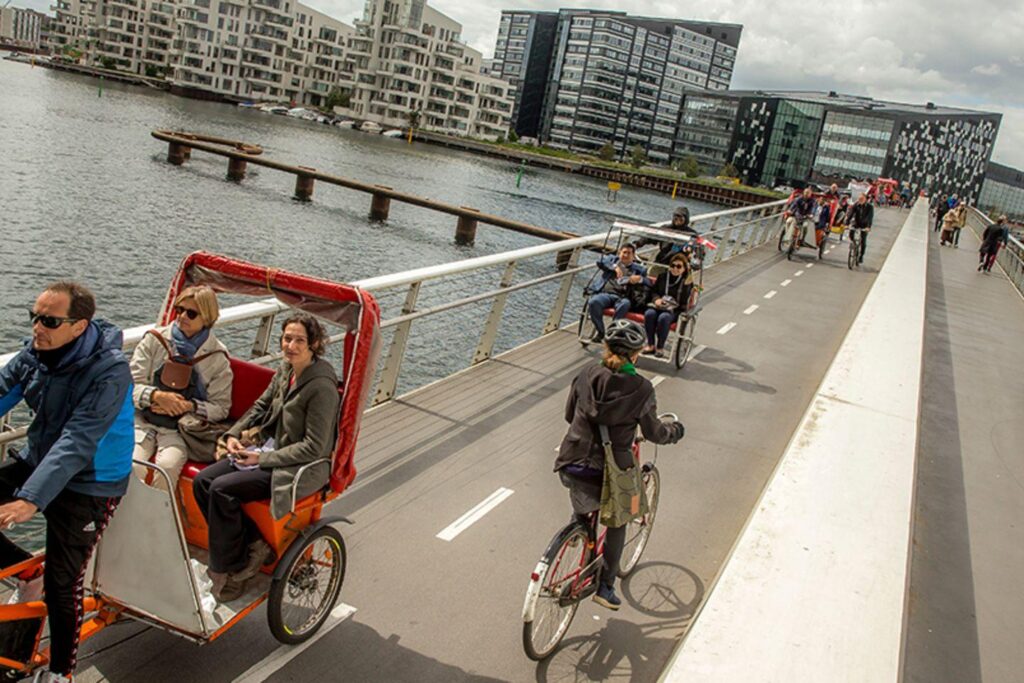
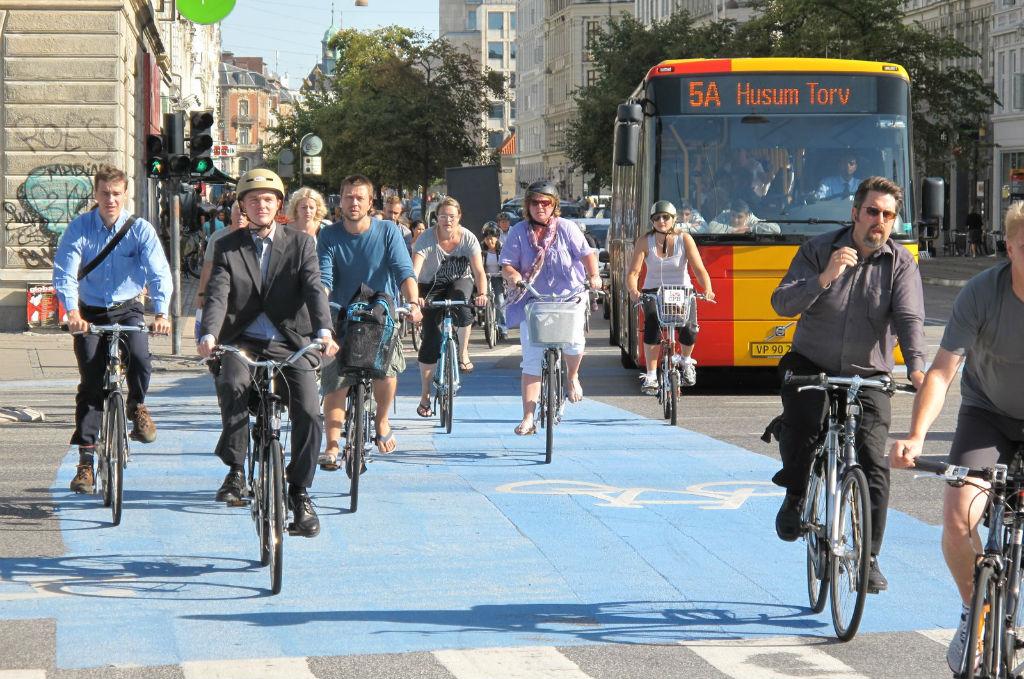
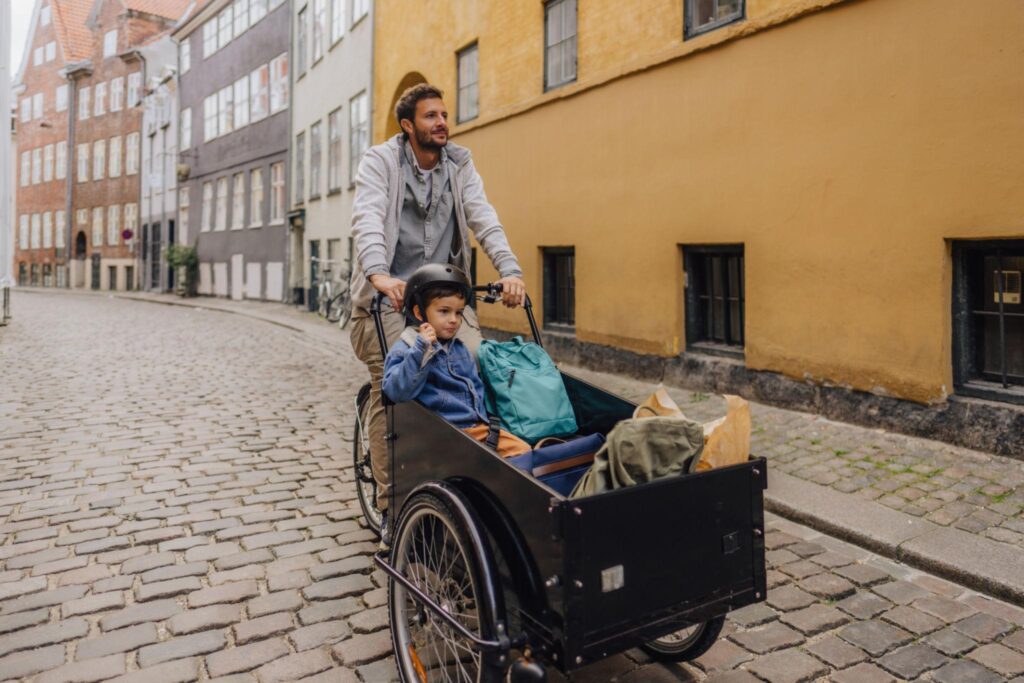
The most visible expression of Copenhagen’s environmental ethos is its cycling culture, but to reduce it to infrastructure would be to miss its deeper meaning. Yes, there are over 390 kilometers of designated bike lanes. Yes, more than 60% of residents commute by bicycle daily. But what becomes clear as you move through the city is that cycling is not merely encouraged—it is normalized, dignified, and protected.
Children cycle to school alongside parents transporting groceries in cargo bikes. Elderly residents ride with quiet confidence. Business professionals arrive at meetings without the insulation of cars. The bicycle, in this context, becomes a social equalizer and an ecological instrument simultaneously.
This aligns closely with the ideas later expanded by thinkers such as Kate Raworth, whose “Doughnut” model emphasizes meeting human needs within ecological limits. Copenhagen’s cycling system does precisely that: it supports mobility, health, and social connection while drastically reducing emissions and urban congestion.
The result is not only cleaner air, but a subtle rehumanization of the city itself.
Water That Reflects Responsibility

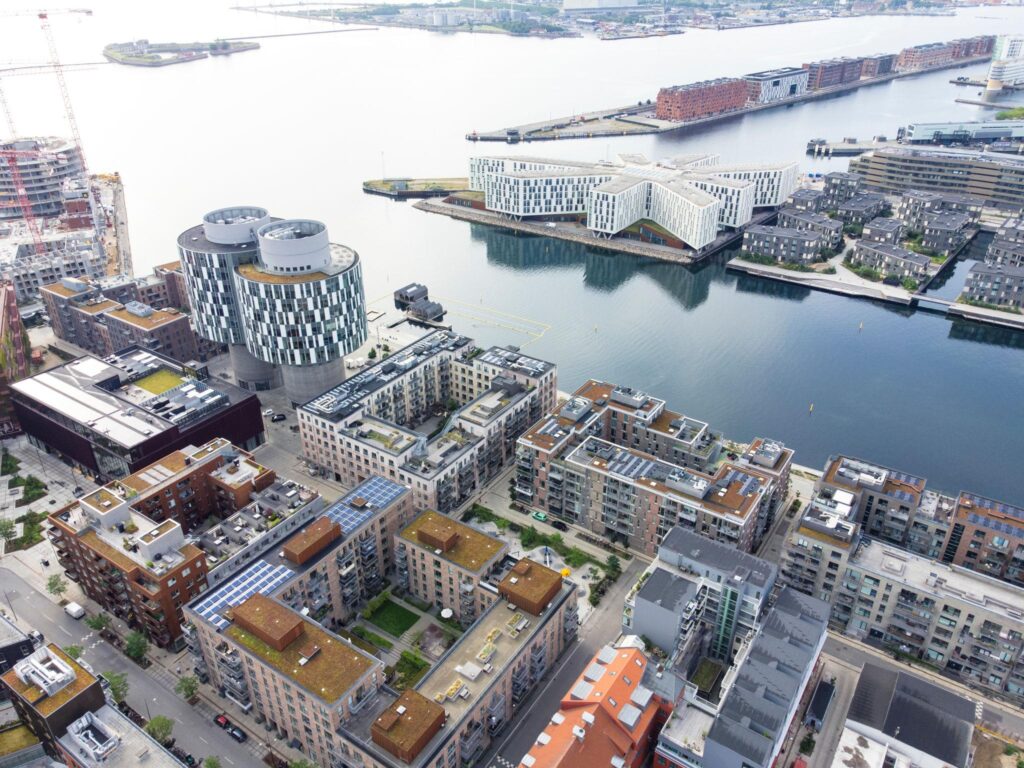
Perhaps the most striking symbol of Copenhagen’s environmental commitment is its harbor. Once heavily polluted by industrial waste, it is now clean enough for residents to swim in year-round. At places like Islands Brygge, locals gather along the water’s edge, slipping into the harbor as naturally as one might enter the sea.
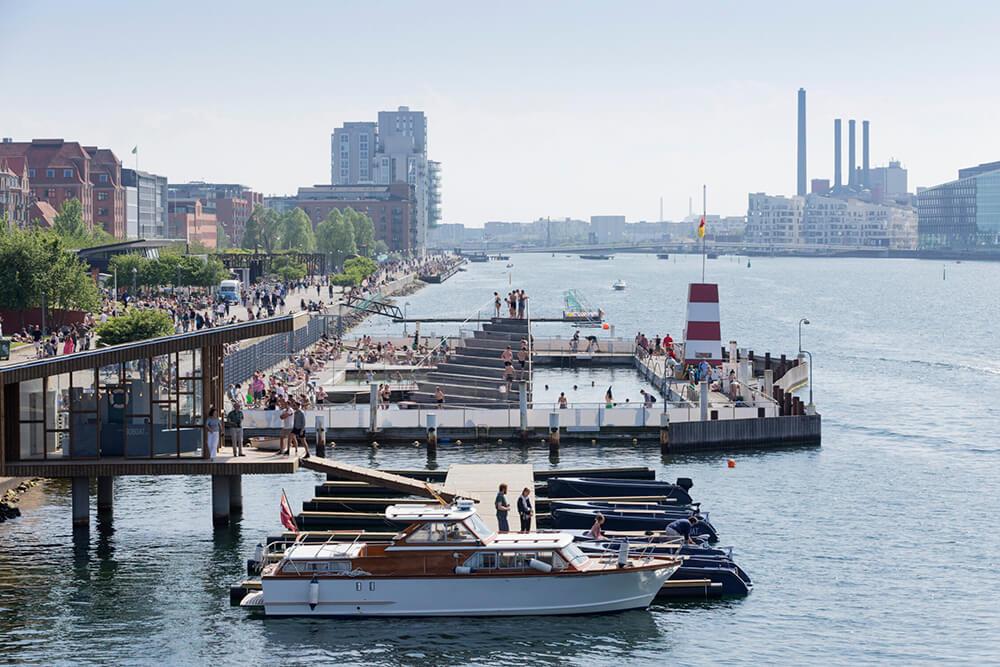
This transformation required a complete rethinking of wastewater management, stormwater systems, and industrial regulation. It was not a cosmetic intervention, but a systemic one—an understanding that water quality reflects the integrity of the entire urban ecosystem.
Here again, Capra’s insights resonate: pollution is not an isolated problem but a symptom of disconnected systems. Copenhagen’s response was to reconnect them—to treat water, waste, and urban life as interdependent processes rather than separate domains.[1]
For visitors, the experience is quietly profound. To swim in the heart of a capital city is to feel, in a very immediate way, what environmental stewardship can restore.
Energy from the Invisible


Beyond what is visible at street level lies another layer of Copenhagen’s sustainability: its energy systems. Denmark has become a global leader in wind energy, with turbines both onshore and offshore contributing significantly to the national grid. In Copenhagen, this commitment is complemented by district heating systems that reuse waste heat to warm homes across the city.
One of the most emblematic projects is Amager Bakke, a waste-to-energy plant that doubles as a recreational space, complete with a ski slope. It is a structure that embodies a new philosophy of infrastructure—one that refuses to separate utility from human experience.
This approach reflects the broader scientific framework articulated by Johan Rockström, whose work on planetary boundaries underscores the necessity of operating within Earth’s ecological limits. Copenhagen’s energy model is not perfect, but it represents a serious attempt to align urban life with those limits, reducing reliance on fossil fuels while maintaining a high quality of life.
Food, Community, and the Return to Proximity



Sustainability in Copenhagen is not confined to infrastructure; it extends into the rhythms of daily life, particularly in how food is sourced and consumed. The city has one of the highest shares of organic food consumption in the world, supported by strong public policies and a cultural appreciation for seasonal, local ingredients.
Restaurants—ranging from modest cafés to globally recognized establishments—often emphasize simplicity, traceability, and respect for the natural qualities of food. This culinary philosophy mirrors the ecological principle that systems function best when they remain close to their sources.
Community gardens and urban farming initiatives further reinforce this connection, offering residents opportunities to engage directly with the land, even within a dense urban environment.
For travelers, these experiences offer more than nourishment; they provide a sense of participation in a broader ethic of care.
A City Designed for Human Well-Being
What ultimately distinguishes Copenhagen is not any single initiative, but the integration of many. Transportation, energy, water, food, and public space are not treated as isolated sectors, but as parts of a coherent whole.
This integrative approach reflects what Capra describes as a shift from a mechanistic worldview to an ecological one—a recognition that the health of a system depends on the quality of its relationships.[2]
In practical terms, this means designing a city where:
- movement does not harm the air
- energy does not deplete the future
- water does not carry the memory of neglect
- and public spaces invite presence rather than escape
It is a vision that, while grounded in policy and science, ultimately expresses something more human: a quiet commitment to care—for the environment, for one another, and for the generations that will inherit both.
Traveling Through Responsibility
To visit Copenhagen is not to step into perfection. The city continues to face challenges, including emissions tied to consumption and the complexities of maintaining sustainability in a globalized world. Yet what it offers is not a finished model, but a living example of what becomes possible when intention, policy, and culture move in the same direction.
For those who travel here, the experience lingers not in grand monuments, but in small, repeated gestures: the ease of cycling, the clarity of water, the presence of green spaces, the quiet dignity of a system that works.
In a time when environmental conversations often feel abstract or overwhelming, Copenhagen offers something rare—a tangible expression of hope, grounded in reality.
And perhaps that is its greatest contribution: not simply reducing harm, but reminding us that another way of living is not only imaginable, but already underway.
Footnotes:
[1] Capra, Fritjof. The Web of Life: A New Scientific Understanding of Living Systems. Anchor Books, 1996.
[2] Capra, Fritjof & Luigi Luisi. The Systems View of Life: A Unifying Vision. Cambridge University Press, 2014.
Additional references:
- Raworth, Kate. Doughnut Economics. Chelsea Green Publishing, 2017.
- Rockström, Johan et al. “Planetary Boundaries: Exploring the Safe Operating Space for Humanity.” Ecology and Society, 2009.